
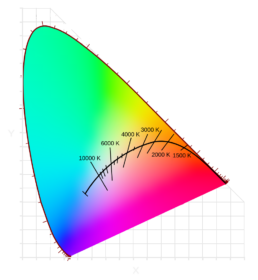
It's time to stop using the Kelvin scale for display calibration
The Kelvin scale has always been relatively simple to understand in the context of display calibration. Choose a higher value and your display white point will be bluer; choose a lower value and it will be yellower, etc. But this is where the simplicity stops and the confusion begins. What do we do if the white point appears to be magenta or greenish? And why doesn’t the display calibration Kelvin value correlate with the value of our lighting? In other words, why does calibrating to ~5700 Kelvin match 4100 Kelvin lights? Why can’t we calibrate to 4100K to match 4100K lights? So…


Celebrating 25 Years
25+ years ago I was splitting my time between a job where I was a scanner operator and an apprenticeship with a master printmaker. In the printmaking studio we were making large digital negatives on an imagesetter and using them to make hand-coated platinum/palladium prints in a wet darkroom. Back then everyone was using Photoshop 2 and had CRT monitors. While the color scans coming off the Leaf45 seemed pretty decent after a little color correction in curves, I was frustrated with how different the handmade B&W platinum palladium prints looked in comparison to the same images onscreen.…

30 years of Photoshop and counting
I just realized it's been 30 years since I first got my hands on a Photoshop beta in 1989 at MD Anderson's Imaging center in HTX. I never saved that beta but have kept every copy of Photoshop I've ever used since. Here's a screen grab from my application folder:
 Every copy of Photoshop since the betas
They kinda screwed up the alphanumeric sequencing with CC but heck, I want to see what happens next.
Every copy of Photoshop since the betas
They kinda screwed up the alphanumeric sequencing with CC but heck, I want to see what happens next.
Celebrating 20 Years of Color Management Consulting
20+ years ago I was splitting my time between a job where I was a Leaf45 scanner operator and an apprenticeship with a master printmaker. In the printmaking studio we were making large digital negatives on an imagesetter and using them to make hand-coated platinum/palladium prints in a wet darkroom. Back then everyone was using Photoshop 2 and had CRT monitors. While the color scans coming off the Leaf45 seemed pretty decent after a little color correction in curves, I was frustrated with how different the handmade B&W platinum palladium prints looked in comparison to the same images…
Commentary: Monitors are bad and noise (can be) good
We'd like to think that todays $1000+ LED LCD displays are great but I'm going to say they're not. They suck actually. We just don't know better because we haven't seen anything better - yet. Today's displays are like cars from the 1970s - much better transportation than a decade prior but still horribly polluting, underpowered and unsafe in comparison to what's coming in the next few decades. Today's desktop computer monitors are fairly low resolution ranging from 72-150ppi. While this works fine for 95% of the people out there communicating via email and browsing the web, its having some…
HiDPI display support will significantly enhance our relationship with photography
After spending 6 hours with Lightroom's new HiDPI Retina Display Support, let's me just say it's incredible. A giant step forward. It's like seeing all of your images in a whole new light. Looking at images on a ~300ppi screen with the same clarity and resolution of a fine print is a long time dream of mine that I know would someday come true.
 We've been living in the dark ages with our ~72ppi displays. We've been seeing not the true nature but a facsimile of our images. Things like sharpness,…
Student Work: PhotoMuse Austin Workshop
I had the privilege of teaching an unusual photography workshop last week with two fantastic photographers I admire - Lynn Johnson and Penny De Los Santos. Our PhotoMuse workshop helps people find their inspiration and photographic eye through self-assigned photographic projects - finding their muse, if you will. We push participants outside their comfort zones and encourage them to make work they've never made before, and more importantly, to engage in the process of making images differently and more fully. This can be difficult. Sometimes people say they don't want to be pushed, but we…
Night Portraits of Night Photographers
I think it's important to show your work to your peers and get feedback, especially when it's new work you're experimenting with. In this spirit, I thought I'd share a few night portraits I've been experimenting with. At this year's Night Photography Festival in Mono Lake, CA, I had a blast teaching an advanced class and making images side-by-side with so many people. But it was all the guest speakers, instructors and fantastic night photographers all in one place that was so unique about this gathering. Lance and I reserved Bodie State Park for two nights instead of one this year so that our…
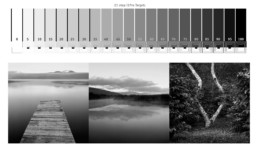
Digital negatives for alternative printing processes: a new approach
I am huge fan of the hand-crafted print, and spent a lot of the 90s making digital negatives on imagesetters, as well as studying various 19th century printing processes. It was 1992, I was slinging images in Photoshop 1, cranking out imagesetter negs after hours at my local service bureau and taking them into wet photographic darkrooms to pursue that unique, and ever-satisfying handmade print. A few years later, I interned at Dan Burkholder's studio and helped put together the first book on creating digital negatives for contact printing processes - a process that he deserves sole credit for…
Display Recommendation Thoughts
I get a lot of questions about what displays I recommend, and answering them can be tricky. Some people are seeking justification for spending a lot of money on something they may not need. There are a lot of old notions that we need to forget as well as newer features we need to consider. I have a few display recommendations on the recommendations page, and people often ask me why brands like NEC or Eizo monitors are not on there. My feeling is that the internal calibration hardware that some displays have (NEC, Eizo, Sony, Barco, etc.) played an important role in addressing real issues we…